



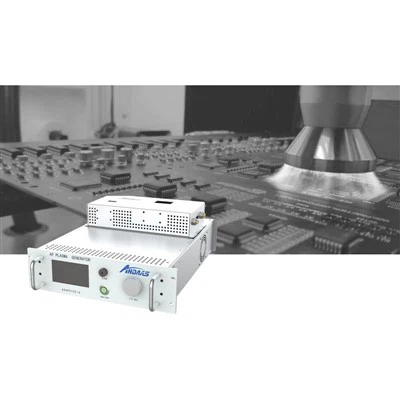
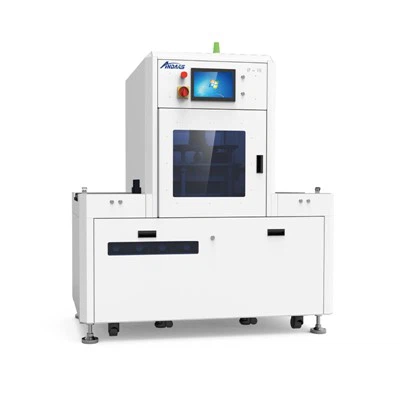
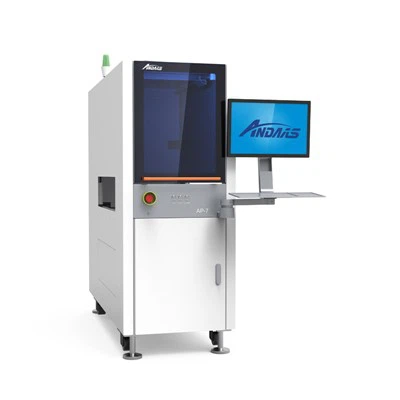
Plasma Cleaning Machine
What is Plasma Cleaning Machine?
Plasma cleaning systems can be used for a variety of surface cleaning purposes before processing. It is efficient for removing surface oxidation and clearing mineral residue from surfaces. It is also used for preparing surfaces of plastics and elastomers, as well as for cleaning ceramics.
Why Choose Us
High Quality
Anda equipment covers the application of consumer electronics, automotive electronics, communication electronics, instrument equipment, electric appliances, new energy, power supply, LED, military electronics, medical electronics, semiconductor and other industries.
Technical Support
Our team of experts is available to assist with troubleshooting, answer technical inquiries, and provide guidance.
Shipping Service
We have established a robust shipping service offered to ensure timely and secure delivery of orders worldwide.
Customer Service
We prioritize open communication to address our clients' specific requirements and deliver personalized solutions.
Benefits of Plasma Cleaning
When it comes to surface cleanliness, plasma cleaning offers unparalleled advantages. Utilizing energetic ions and reactive species removes contaminants, improves adhesion properties, and preserves the integrity of materials.
Let's take a closer look at each of these benefits:
Enhanced surface cleanliness: Plasma cleaning goes beyond conventional methods by thoroughly and deeply cleaning surfaces. It removes organic and other contaminants, such as oils, dust, and oxides, leaving surfaces exceptionally clean and free from impurities.
Efficient removal of contaminants: With its unique ability to break down molecular bonds, plasma cleaning ensures the efficient removal of even the most stubborn contaminants. It tackles surface residues that are challenging to eliminate using traditional cleaning techniques, making it an indispensable tool in various industries.
Improved adhesion properties: One of the key advantages of plasma cleaning is its ability to enhance the adhesion properties of surfaces. Removing contaminants and activating the surface create a clean and receptive substrate for subsequent processes, such as bonding, coating, or printing. This leads to improved product quality, reliability, and performance.
Preserving material integrity: Unlike harsh chemical treatments or abrasive methods, plasma cleaning is gentle on delicate materials. It does not cause damage or alter the properties of the surface, ensuring the integrity of the material is preserved. This makes it suitable for various applications, including sensitive electronics and fragile artifacts.

Having discussed the benefits of plasma cleaning, it's now time to look at the different types of plasma cleaning used in semiconductor manufacturing. There are two main categories: charge based and pressure based. Charge-based plasma cleaning is a process that uses an electric field to generate ions which interact with materials on the surface of products being manufactured. This creates a uniform and clean environment for further processing steps. Pressure-based plasma cleaning does not require electricity but instead relies on a pressurized gas, such as oxygen or nitrogen, to break down molecules found on the product surfaces into smaller fragments. These fragments can then be removed more easily compared to traditional methods like scrubbing or rinsing.
Because both processes use different techniques to achieve similar results, they have their own advantages and disadvantages when applied to semiconductor manufacturing. For instance, charge-based plasma cleaning requires higher temperatures than pressure-based systems but is faster and more efficient in removing contaminants from sensitive components such as integrated circuits and transistors due to its ability to pass through small openings without damaging them. On the other hand, pressure-based systems tend to produce better quality end products since they don't create heat damage during the process. Additionally, these systems provide greater control over specific parameters such as temperature, pressure, flow rate and duration so manufacturers can tailor the process according to their particular needs.
No matter which method is chosen by manufacturers though, plasma cleaning provides numerous advantages that make it essential in semiconductor production today; from improved yields and reduced waste disposal costs associated with manual removal methods to increased product consistency throughout all stages of fabrication – there's no denying its importance in this industry.
Surface cleaning using plasma is an economical way to clean specimens uniformly and securely through plasma treatment. Removal of contaminants from the studied substrates without affecting the overall properties of the material is one of the benefits of the plasma surface cleaning method. Plasma cleaning is widely used in the circuit industry, including cleaning the PCB board before coating and cleaning the lead frames during the packaging process. Plasma sample cleaning has significant advantages over other surface cleaning methods as it applies to a wide range of materials, is eco-friendly, residual-free, and effective in highly sensitive applications like cleaning medical equipment.
Plasma surface cleaning is a process in which impurities and contaminants of the sample surface are removed by the creation of high-energy plasma from gaseous particles. Gases such as oxygen, air, and a combination of air, nitrogen, or hydrogen are used for this purpose. Applying a high DC voltage or AC voltage (in the range of kHz to several MHz) ionizes these gases and generate plasma. In plasma, gaseous atoms are excited and energized and often ionized. Plasma active components include atoms, molecules, ions, electrons, free radicals, and high-energy photons with low wavelengths in the UV range, as the last one is the origin of plasma color.
These constituents encounter the exposed surfaces to perform various vacuum plasma treatment procedures like plasma coating, plasma functionalization, and plasma cleaning processes such as plasma etching and ashing.
Created plasma to clean the sample surface is usually formed in a vacuum medium (pressure about 1 millibars). The plasma at atmospheric pressure is also used in some cases (You can read more about pressure gauges).
Plasma surface cleaning is a process in which impurities and contaminants of the sample surface are removed by the creation of high-energy plasma from gaseous particles. Gases such as oxygen, air, and a combination of air, nitrogen, or hydrogen are used for this purpose. Applying a high DC voltage or AC voltage (in the range of kHz to several MHz) ionizes these gases and generate plasma. In plasma, gaseous atoms are excited and energized and often ionized. Plasma active components include atoms, molecules, ions, electrons, free radicals, and high-energy photons with low wavelengths in the UV range, as the last one is the origin of plasma color.
How to Effectively Clean the Sample Surface by Glow Discharge Plasma?
There are many factors in creating a plasma that can control the productivity of the plasma cleaning procedure. The type of these items are among the key parameters.
Power source
Pressure level
Sample location
Gas
Operation time
Plasma Power Source
Plasma may be produced with DC or RF voltage. Choosing the appropriate source for surface cleaning applications depends on a variety of factors, including cost and power, as low-frequency sources are cheaper but less efficient. In order to properly select the source, the user must know which factors are more important to eliminate the contaminants in question: time, power, consumption gas, etc.
Pressure in Plasma Cleaning Procedure
The plasma for the surface cleaning procedure can be created under atmospheric or vacuum conditions. Plasma cleaning parameters are different as classified by the range of applied voltage, chamber pressure, gas, sample position, etc.
The atmospheric pressure plasma cleaning uses weak and non-uniform corona discharge plasma at short electrode-surface distances to clean a surface, while low-pressure plasma cleaning benefits varied control factors such as sample position.
Sample Location in the Plasma Chamber
The position of the sample inside the vacuum chamber affects the cleaning procedure either. The energy of the plasma ions and electrons strongly depends on the sample distance from the cathode/anode. Also, the sample surface temperature rises as the electron bombardment increases on the anodic plate, while the sample placed on the cathode, is bombarded with energetic ions which etch or react with the surface. If the sample is placed somewhere between the two electrodes, the bombardment intensity can be tuned with a biasing voltage.
Oxygen Plasma
If the used gas in the plasma is oxygen, the created plasma is an economical, efficient, and environmentally friendly means of thoroughly cleaning the studied surfaces. Ultraviolet energy in plasma is effective in breaking most of the organic bonds (C – H, C – C, C = C, C – O, C – N) of the surface contaminants and causes the separation of high molecular weight pollutants. The second stage of purification involves ionized ozone, free electrons, and oxygen particles created in the plasma medium, such as O2+, O2−, O3, O, O+, and O−.
Hydrogen Plasma
There exists an oxide layer on almost all metal surfaces exposed to the air atmosphere, which helps to prevent the corrosion of the metal bulk. However, these oxide layers act as a barrier that obstructs electrical contacting processes such as soldering and bonding. Hydrogen molecules, ions, and radicals in the hydrogen plasma create vapor with the oxygen of the oxide layer, which is easily pumped out by the system vacuum pump.
Argon Plasma in Plasma Cleaner
Some substances, like salts, inorganic materials, or ceramics, cannot be removed by the plasmas created from oxygen or hydrogen gases. Here, the ion bombardment with inert gas (like argon or helium) plasmas is used to eliminate almost all substances through physical etching, or the so-called micro-sandblasting. In these case, plasma-activated argon atoms and ions behave like molecular sandblasts instead of chemical reactions and can etch the substrate contaminants, and even its surface, leading to elevated surface roughness, which should be optimally controlled if low surface roughness is required. These pollutants evaporate during the process and are evacuated from the chamber.
Cleaned Surface Characterizations
The quality of the surface cleaning process and removal of organic matter can be monitored by measuring the contact angle of the water droplet. In the case of organic contamination, the water droplet's contact angle with the sample surface increases, and the contact angle of the droplet decreases as the contamination decreases to reach the contaminant-free contact surface. This picture, shows the contact angle of a drop of water with the glass sample surface before and after cleaning. In addition to the water contact angle, XPS and AFM tests are also used to justify the quality of sample surface after cleaning.
Plasma Cleaning Applications
The plasma sample cleaning process is often required to remove contaminants from surfaces prior to use in the fabrication process. This process can be applied to a set of materials along surfaces with complex geometries. Plasma cleaning can be a good alternative to wet chemical processes, such as piranha etching, which contain hazardous chemicals, increase the risk of contamination with chemical agents, and subject the process surfaces to the risk of etching. In surface coating processes, if the surface is cleaned prior to the plasma coating process, it will have a significant effect on the quality of the created thin film. The plasma cleaning process results in a uniform film coating and better adhesion to the substrate.
The Main Differences Between Laser Cleaning and Plasma Cleaning
Speed of the Cleaning Process
Laser cleaning is much faster than plasma cleaning, whose duty cycle is relatively slow because it spends a large portion of its time moving mechanical parts and a small portion actually cleaning.
Laser cleaning uses ultra-fast rotating mirrors (galvo mirrors) to direct laser light. For example, in battery manufacturing, it only takes about 100 microseconds to move the laser beam from one cell to the next cell when preparing surfaces for welding.
Plasma cleaning needs to moves a nozzle above the surface to be cleaned using a gantry system. These mechanical movements, which are not as fast as galvo mirrors, slow down the cleaning process. In battery manufacturing, the nozzle needs to be moved above every single cell, making it a longer process than it needs to.
Mechanical Strength of Welds
When cleaning surfaces prior to welding, laser cleaning provides stronger, more consistent welds than plasma cleaning. This is especially important in industries with tight specification limits such as the battery industry, where quality insurance requires 6 sigma (3.4 defects per million) or even 7 sigma (0.02 defects per million)
Welds that are plasma cleaned will typically break under 1000 gf (grams-force). These welds are also highly inconsistent and have a hard time consistently meeting specification limits, with a Process Capability Index (Cpk) below 1.
With laser cleaning, welds will only break between 3000-5000 gf. Laser cleaning has no problem meeting specification limits, with a Cpk close to 2.


Cleaning Quality
In some cases, plasma processing leaves carbonized residues stuck to the surface, and these contaminants can be quite hard to remove—even with a secondary cleaning step. Many manufacturers have encountered this problem when trying to remove oxides.
Like plasma cleaning, the performance of laser cleaning varies according to the contaminants that need to be removed. With laser cleaning, contaminants must absorb the laser's wavelength at a good ratio. When this is the case, contaminants are vaporized into the air, and nothing remains on the surface.
At Laserax for example, our laser cleaning systems generate a 1,064 nm wavelength which is absorbed well by a range of contaminants that include oxides, dusts, oils, coatings, and electrolytes. Some contaminants such as clear coats cannot be removed properly using this wavelength.
Roughness Level
Laser cleaning systems can be used to both clean and roughen surfaces, providing the complete surface preparation needed for applications like adhesive bonding. In contrast, plasma cleaning can only be used to remove contaminants.
Our Factory
Guangdong Anda Automation Solutions Co.,Ltd. is a smart equipment and system manufacturer providing vertical integration of research & development, manufacturing, sales and service to fluid applications, and intelligent automation systems. Anda's main product lines include high precision dispensing machines, conformal coating systems, plasma treatment equipment, curing systems, multi-functional assembly systems, semiconductor manufacturing equipment, medical electronic dispensing and assembly machines, and smart manufacturing system solutions. Anda equipment covers the application of consumer electronics, automotive electronics, communication electronics, instrument equipment, electric appliances, new energy, power supply, LED, military electronics, medical electronics, semiconductor and other industries.
FAQ
We're well-known as one of the leading plasma cleaning machine manufacturers and suppliers in China. If you're going to buy plasma cleaning machine made in China, welcome to get quotation from our factory. Also, customized service is available.